RSA 26 Shrewsbury
24-25th April 2026
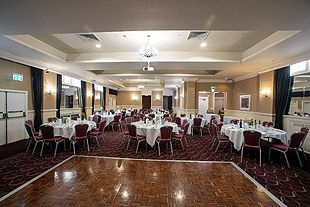
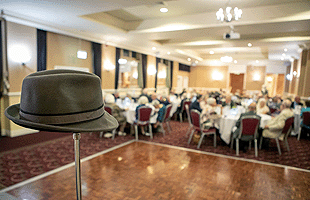
Albrighton Hall
our home for the AGM and social weekend
by
Richard Wright
I’ll leave my RSA colleagues to review the AGM itself, so I can report on our home for the weekend, which is a very handsome old manor house that’s been revised or rebuilt many times – by many different families - over the centuries:
Local records show that in the 1630s, Thomas Ireland built Albrighton Hall on much earlier foundations. The Ireland family lived at Albrighton Hall for several generations until the estate was purchased in 1809 by a Welsh clergyman called the Rev’d Inigo William Jones. If you’re fans of AI and search Albrighton Hall, it will tell you that the property was once owned by Inigo Jones, the great neo-classical architect and friend (and rival) of Sir Christopher Wren. Absolutely not – so I think you lost the point a bit there, AI.
Some years later, the estate became home to the Sparrow family, one of whom designed and built the lovely little church (St John the Baptist) opposite the Hall gates. The Sparrows were Lords of the Manor of Albrighton for many years but during World War Two, the building was occupied by a convent of nuns from Tunbridge Wells (I promise I’m not making this up)!
In the 1950s, the Albrighton Hall estate was sold to the RNIB, who had already several properties in the area (including a castle!). The Hall was reconfigured as a residential school for blind boys, who were encouraged not to let personal challenges inhibit their ambitions. Growing up ‘normal’ – as RNIB put it – involved sports (including running) and playing ‘five a side’ football chasing a specially-constructed football with a bell in it. Wow, that must have been a serious challenge, eh? One of the blind boy-pupils who came out top at Albrighton Hall is former Home Secretary David Blunkett (now Lord Blunkett – and deservedly so, I think).
Eventually, RNIB rationalised their establishments and Albrighton Hall became a hotel, travelling through several chains to its current home with Radisson. It specialises in weddings – and what lovely surroundings in which to begin a new life – but on my first evening there was a ‘speed-dating’ event on as well. And I hope they were happy, too, in a less formal way!
On Friday afternoon, Chairman Andy managed our AGM so professionally that it was over in 30 minutes – leaving plenty of time for less formal discussions on pensions and related matters. I’m pleased to report that (for the first time in years) the RSA has a full complement of committee members, which bodes well for the future.
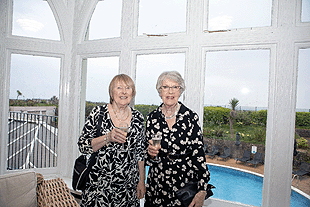
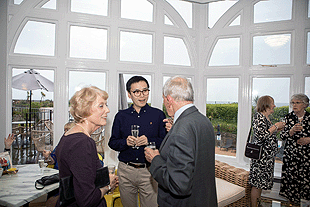
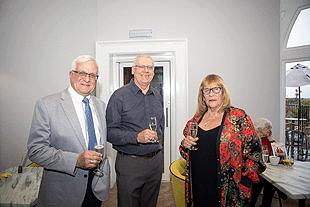
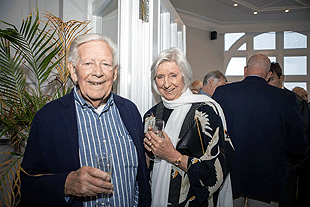
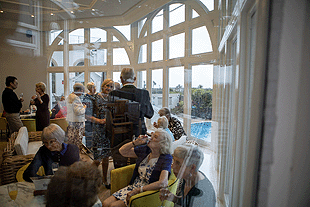
Later in the evening, guests gathered for a drinks reception, followed by an ample buffet supper (then followed by the bar?? Ed).
Saturday morning – time to board the bus!
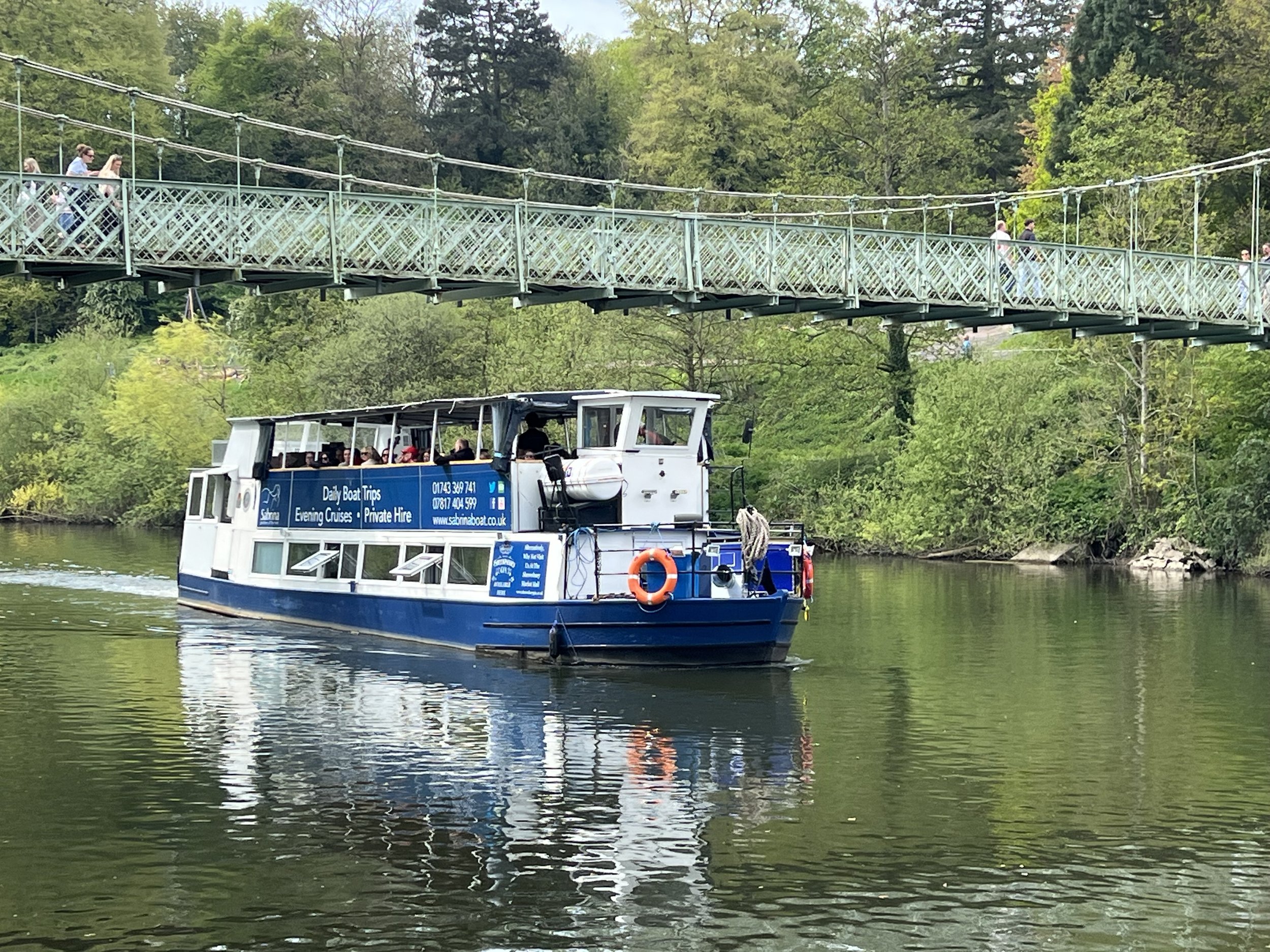
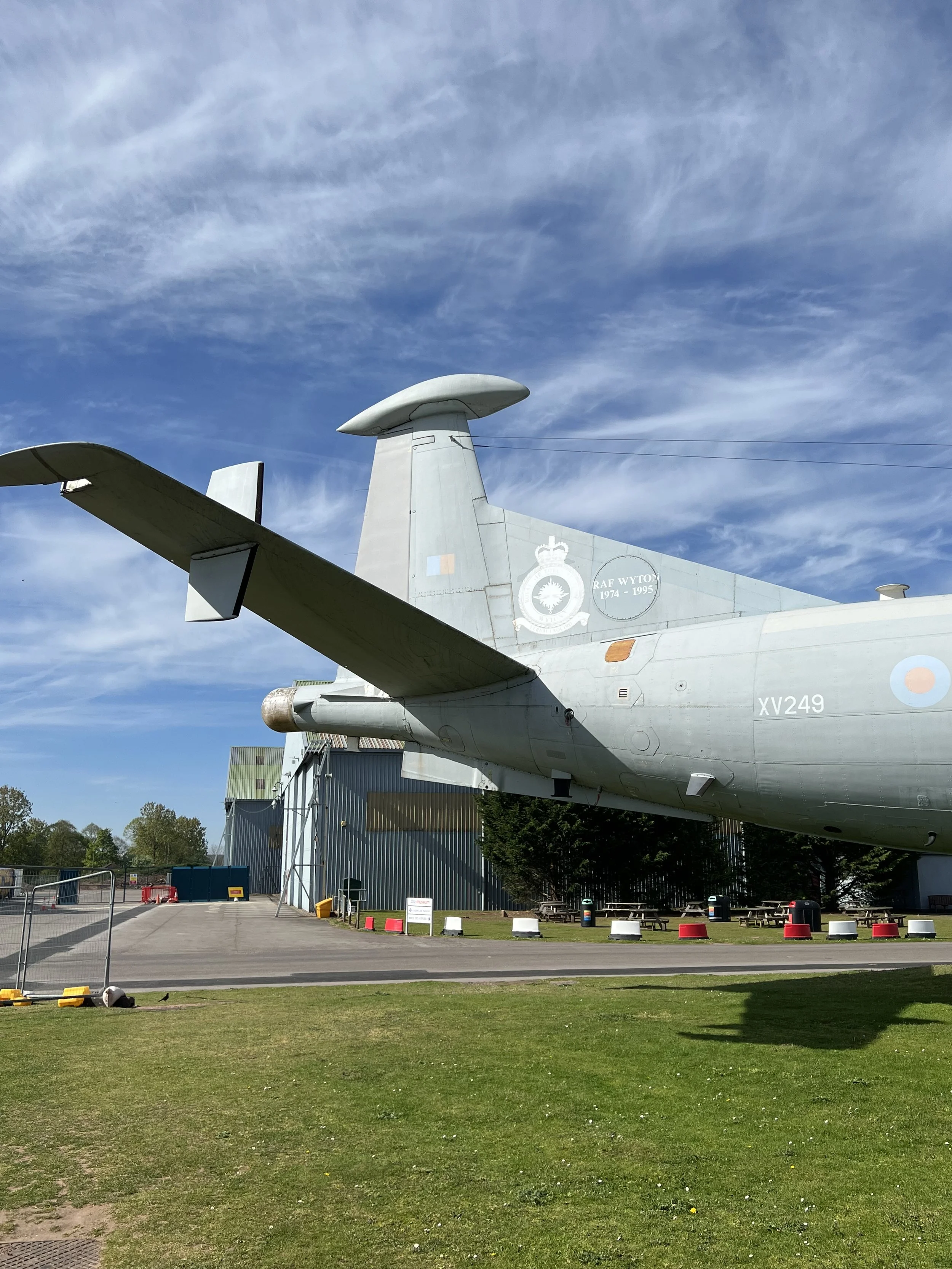
Paul and Chris had arranged two excursions for us: a guided walk around the medieval centre of Shrewsbury, followed by a boat trip on the River Severn, or a tour of the Air Museum at RAF Cosford. I chose the latter because I wanted to see the ill-fated TSR2 (more later on that).
One of the great joys of being a passenger is the opportunity to enjoy the scenery instead of concentrating on driving – and on this trip, it certainly didn’t disappoint, with the rolling Shropshire hills, fresh greens of early spring and the bright yellow fields of rapeseed. We even passed a huge area of land beside the motorway being prepared for a solar farm (let’s hope they can connect it up to the national grid. Ed).
RAF Cosford opened in the 1930s as a training and maintenance base, before becoming a ‘pilot pool’ for the ATAs delivering aircraft to front-line units. Currently, it’s home to the RAF School of Physical Training and the Defence College of Aeronautical Engineering. It’s also home to the RAF’s only official annual airshow.
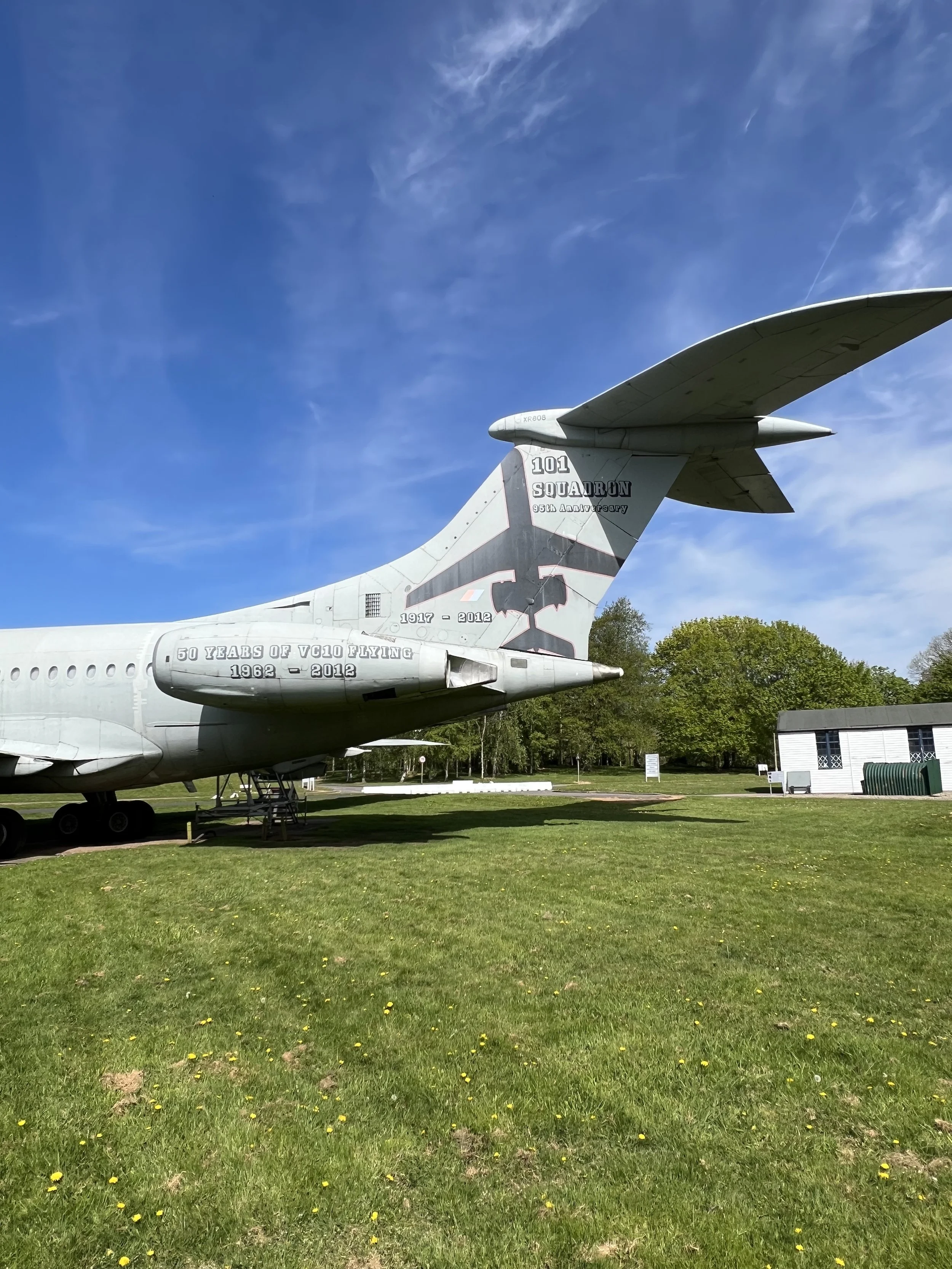
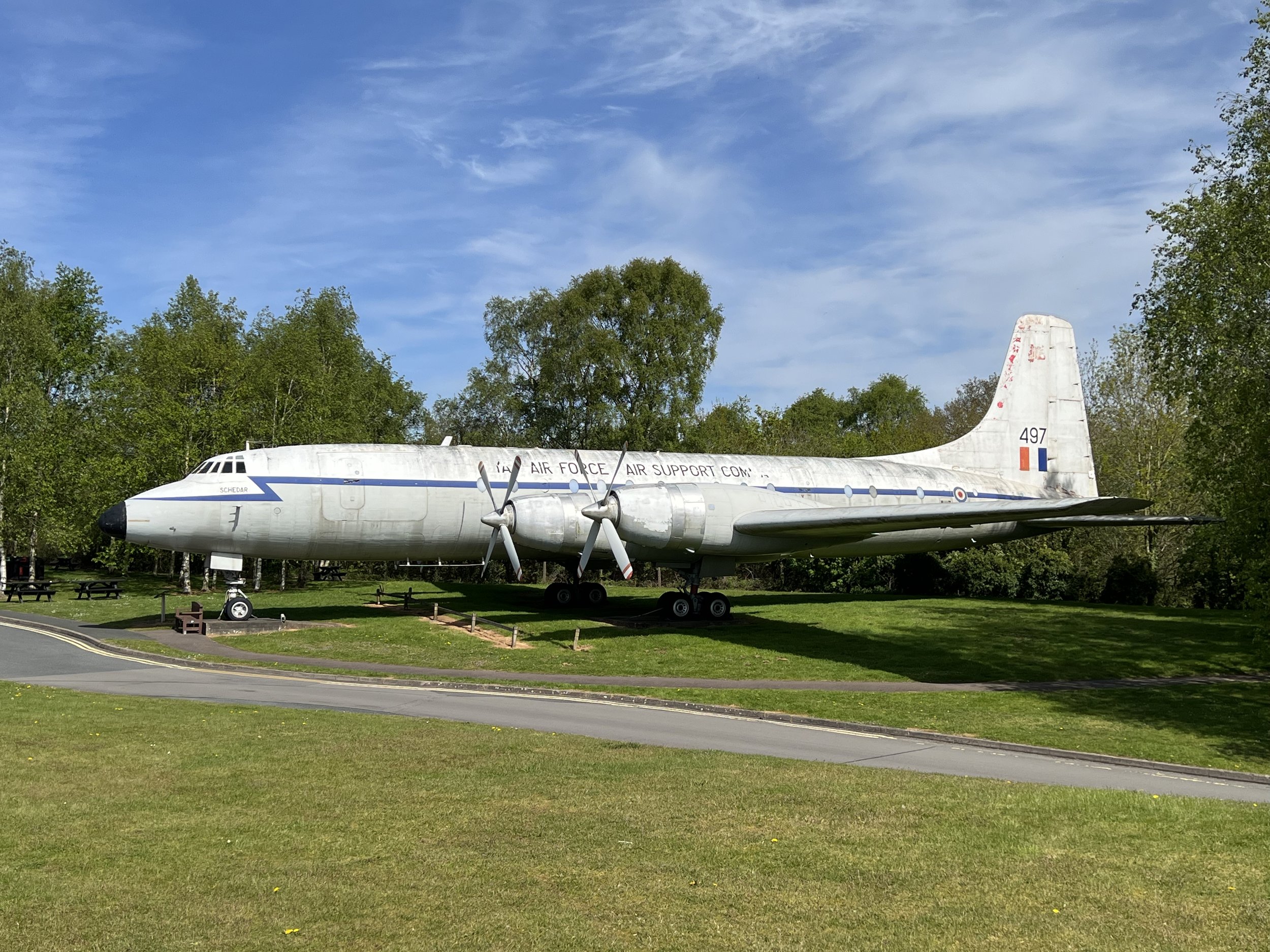
We arrived at the Air Museum passing external exhibits such as the Bristol Britannia (AKA ‘The Whispering Giant’) and the VC10 (do you remember the advertising slogan ‘Try a little VC Tenderness’?). Sadly, although popular with passengers, BOAC couldn’t get rid of them fast enough, giving rise to that airline’s nickname of ‘Rather Buy Boeing’. Happily, the VC10s flew for RAF Transport Command for decades.
The museum houses an extraordinary collection of aircraft, from development, prototype, in-service and retired, together with a wonderful display of models of aircraft that never flew. Its superb new exhibition space is the only place in the world where you can see all three of the RAF’s ‘Cold War’ V bombers (Valiant, Victor and Vulcan) under one roof.
But my main reason for jumping on the bus was to see XR220, one of only two TSR2s remaining from what is still, more than 60 years on, one of the most shameful episodes in British post-war military procurement:
The TSR2 (Tactical, Strike & Reconnaissance aircraft, Mach 2) was designed by the British Aircraft Corporation in response to an MoD request for proposals to replace the Canberra. Essentially a very large Lightning development, it had to fly high enough to avoid enemy interceptors, but also low enough to avoid radar. Nine pre-production aircraft were ordered but only the first (XR219) flew, making more than 90 test flights, mostly in the hands of W/Cdr Roly Beaumont (whom I had the honour of meeting several times for late-night drinking sessions in the House of Lords – but that’s a story for another day).
The aircraft was hugely capable but project costs were increasing and Harold Wilson’s government needed to save money. At the same time, the Americans were developing the ‘swing-wing’ F111 and were very concerned about the superior abilities of the TSR2 and its potential impact on the F111’s export market… Then there was the outstanding ‘War Debt’ the UK owed to the United States… So, the Wilson government was (essentially) told to scrap the TSR2 and buy the F111 instead. The TSR2 project was cancelled in April 1965 – the very day that Cosford’s example was due to make its first flight.
But ‘what goes around, comes around’ and the UK eventually cancelled its order for F111s (huge cost overruns too, and they just kept crashing) and bought Phantoms and (UK) Buccaneers instead, before deciding that collaborative developments (such as the Jaguar, Tornado and Typhoon) were the best way forward.
But the TSR2 cancellation wasn’t just brutal but vindictive: MoD ordered the tools and drawings to be destroyed and the airframes under construction to be shipped to their firing ranges to be used for target practice. What on earth were these people thinking? And I’m not the only person to be angry about this:
Because TSR2 was only one of a long list of pioneering British projects sabotaged by our own governments. Let me give you just a few examples:
· Whittle’s jet engine plans gifted to the Russians after WW2 by our Civil Service;
· The Miles M52 supersonic research project commissioned then cancelled by the MoD, and then gifted to the Americans to emerge (almost unchanged) as the US X1 supersonic project (pilot Chuck Yeager),
· UK Secretary of State Duncan Sandy’s ‘1957 Defence White Paper’ that determined “no further aircraft developments necessary – the future is missiles”.
· ‘Blue Streak’ ballistic missile, developed by the UK then gifted to Europe as the basis for the ‘Ariane’ space rocket launcher.
So, I’m getting hot (well, warm) under the collar wondering what other nation would be so stupid as to sabotage its own projects like we did – and then I discovered (whilst writing this) that we’re not the only nation that punches ourselves in the face: The Americans abruptly cancelled their Northrop ‘Flying Wing’ bomber programme in 1950, then the Canadians their ‘Arrow’ interceptor project that was scrapped in 1959.
So, righteous anger dissipated for the moment, on the walk back to our bus I passed an Andover (with the ‘kneeling’ undercarriage). The Royal Flight used to operate Andovers and I recall being told that they’d been polished so thoroughly over the years that the rivets holding the fuselage skin on had become ‘a bit thin’. I’m sure that’s just a ‘republican’ rumour!
Back on the bus, we returned to central Shrewsbury, where we had time for a walk-around before returning to our hotel. Honestly, there is so much to see, and certainly worth a weekend stayover.
The Gala Dinner beckons….
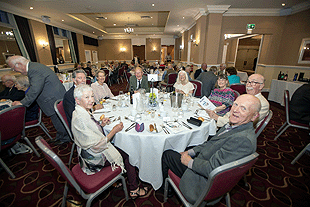
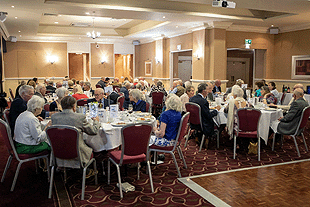
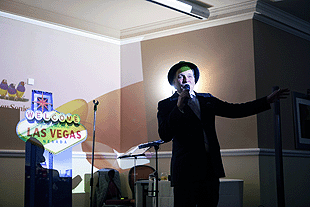
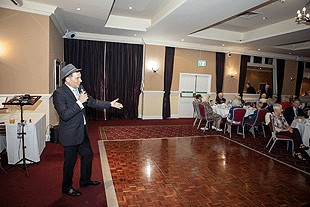
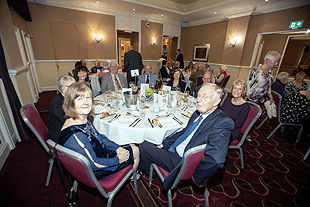
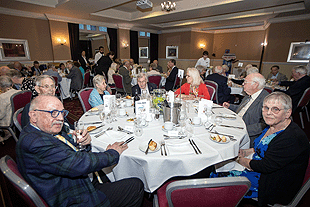
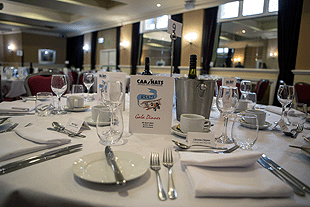
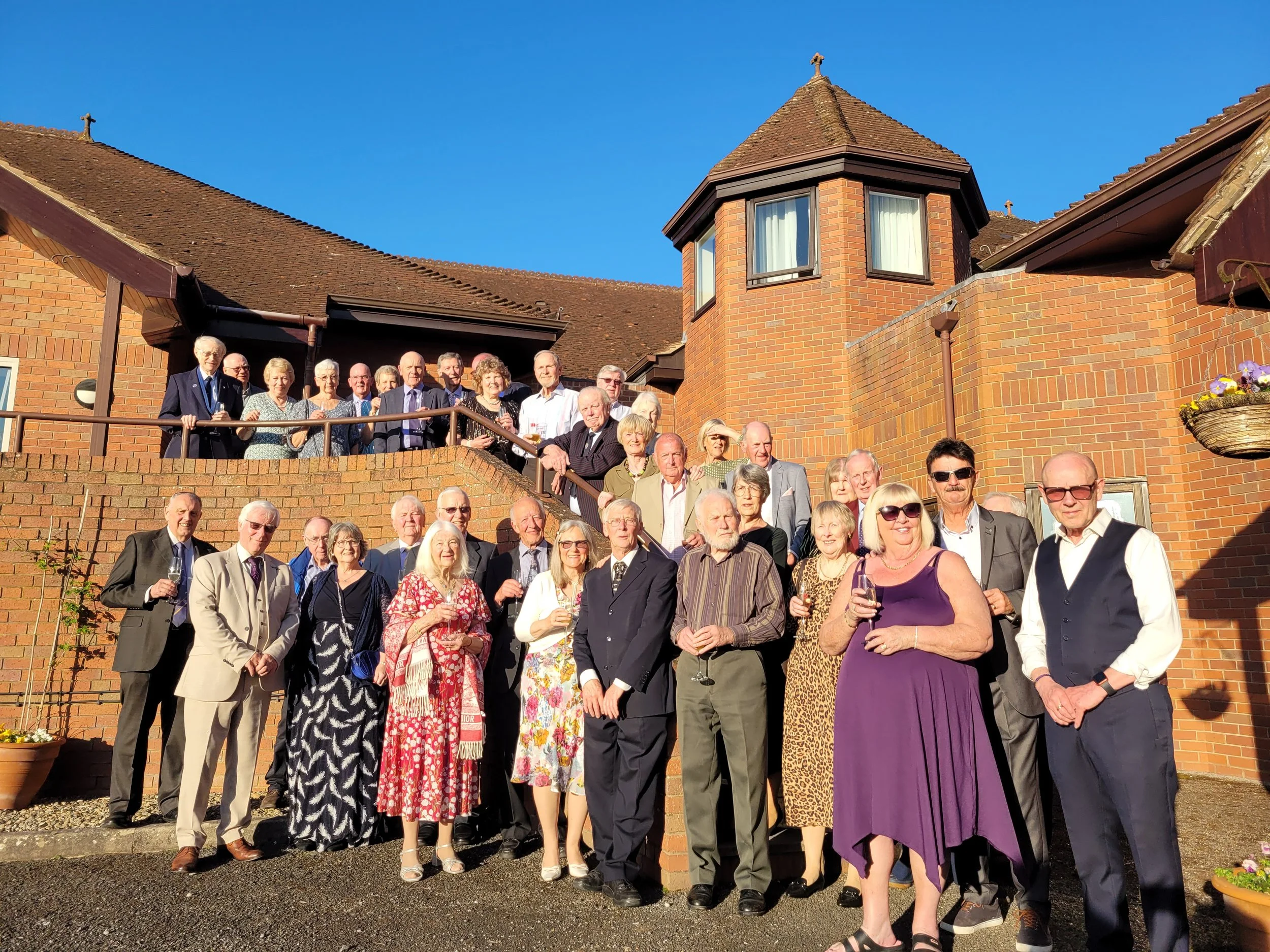
We were blessed with good weather, so the evening drinks on the terrace was a great opportunity to get all RSA weekend attenders ‘in the frame’ for group pictures before we returned to the hotel’s Albrighton Suite for our Gala Dinner. We’d all pre-selected, so the service was both prompt and efficient. The food was excellent, and plenty in measure too, so we were all able to sit back and relax – accompanied by our pianist for the evening James Taylor, who is an Albrighton ‘regular’ artist. James played a wonderful selection of old hit tunes, jazz and even some classical, over some four hours. We invited him to join us in the bar afterwards, but he explained that he’d been out late the previous night (with us in the hotel bar, as it happens) so had to get home. Thanks for all the music James.
Dive into our AGM social reports archive—brilliantly written by Richard Wright, where every year’s story is told with clarity and flair.
Minutes of the AGMs can be found on the Committee Documents page.